
Bangladesh is entering a new era of Smart Agriculture (often referred to as Agriculture 4.0), where data, science, and digital technology are replacing muscle and tradition as the primary drivers of farming. This rapid transformation is being accelerated by forward-looking government initiatives, climate pressures, and a rapidly evolving AgTech ecosystem, with the overarching goal of making farming more productive, profitable, and resilient.
Smart Agriculture in the Bangladesh Context
Smart agriculture in Bangladesh means deploying digital and automated tools to make farm management decisions precise, real-time, and data-driven. Key technology pillars driving this shift include:
- Artificial Intelligence (AI) & Mobile Advisory: Mobile platforms providing AI-driven crop disease detection, localized weather forecasting, and real-time market price updates.
- Internet of Things (IoT) & Precision Sensors: IoT sensors monitoring real-time soil moisture, irrigation needs, and fertilizer application.
- Drones & Remote Sensing: Satellite imagery and drones for large-scale crop health tracking and early pest surveillance.
- Mechanization & Digital Logistics: Power tillers, combine harvesters, automated pumps, and supply chain software connecting producers directly to markets while reducing middleman friction.
National frameworks like the government’s Digital Agriculture 2030 vision and the 25-year Agriculture Roadmap to 2050 explicitly prioritize these tools to build a climate-resilient, export-oriented sector.
The Urgent Drivers Pushing Bangladesh Toward Smart Agriculture
Several critical economic and environmental factors make this technological shift essential:
A. Climate Vulnerability
Rising temperatures, erratic monsoon rainfall, salinity intrusion in coastal regions, and sudden floods threaten crop yields across Bangladesh. Smart tools provide early-warning alerts, precise water management, and adaptive cultivation insights to safeguard production.
B. Rural Labor Shortages
Ongoing rural-to-urban migration and an aging farming demographic make mechanization and digital workflow automation essential to maintain field productivity and control rising operational costs.
C. Empowering Smallholder Networks
Over 80% of Bangladeshi farmers are smallholders lacking direct access to modern inputs, advisory services, and fair credit. Digital platforms level the playing field by delivering real-time advice and market access via mobile devices.
D. Eliminating Post-Harvest Losses (25%–30%)
Up to 30% of agricultural produce is lost due to inefficient logistics, delayed reporting, and fragmented cold-chain tracking. Digital supply chain systems directly eliminate these inventory leakages.
The National Roadmap: Key Government & Institutional Targets
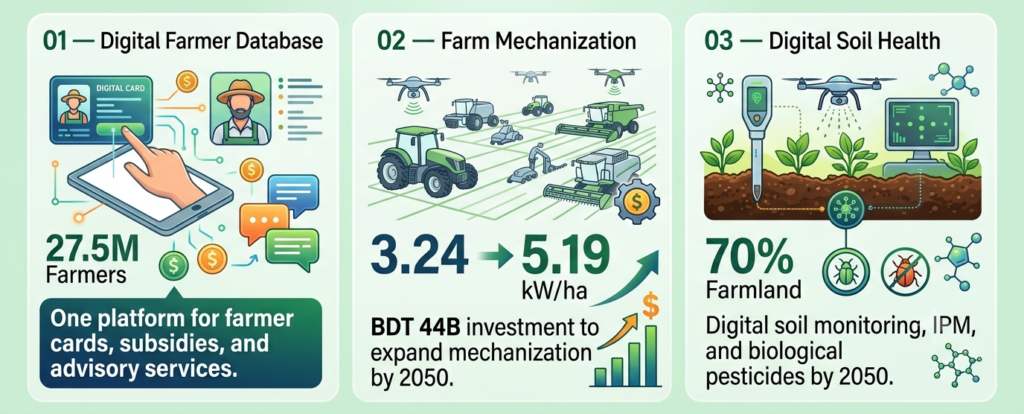
To accelerate digital transformation, the national roadmap outlines ambitious structural goals:
- Unified Digital Farmer Database: Registering nearly 2.75 crore (27.5 million) farmers on a single platform using digital farmer cards to deliver direct subsidies and advisory services.
- Mechanization Expansion: Increasing farm power availability from 3.24 kW/ha to 5.19 kW/ha by 2050 through an estimated 44 billion Taka investment roadmap.
- Integrated Digital Soil Health: Targeting 70% of farmland to utilize digital soil monitoring, integrated pest management, and biological pesticides by 2050.
How Cultive8 Drives Smart Agriculture in Practice
Cultive8 is driving the digitalization of Bangladesh’s agricultural backbone by providing AgriGEN, a specialized enterprise resource planning (ERP) system tailored for agribusinesses.
Transforming Tea Production with AgriGEN
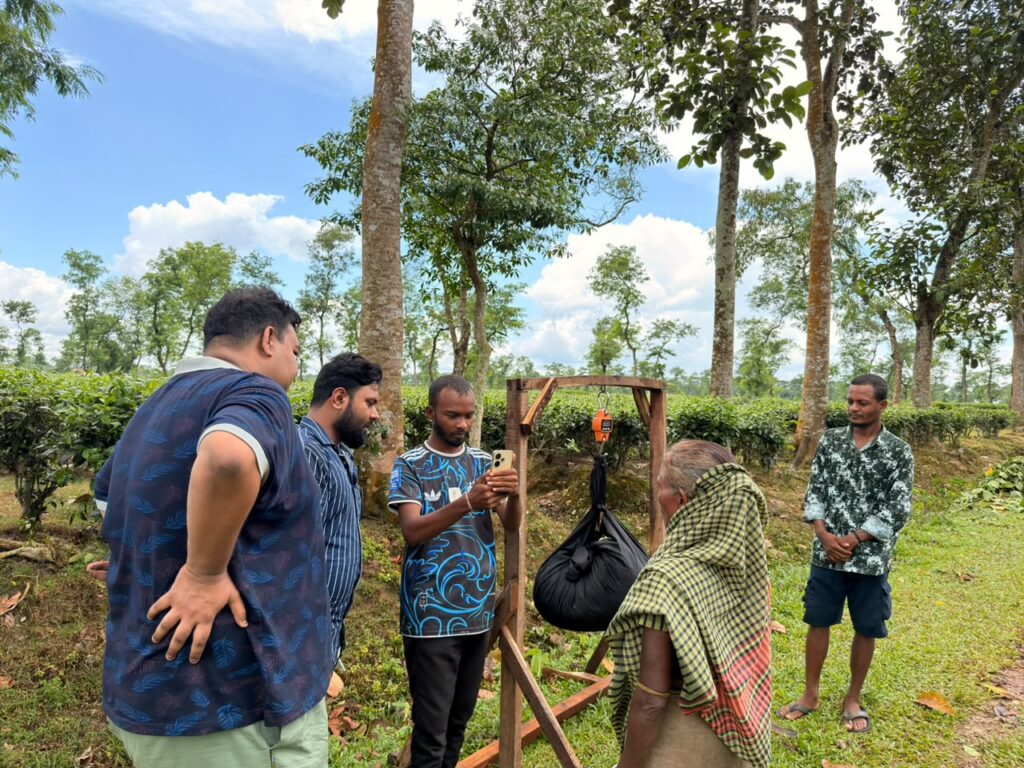
In the tea sector, Cultive8’s AgriGEN ERP is already delivering proven impact across premier tea estates like Ispahani and Finlay. By digitizing field logs, automating leaf-weight tracking, and streamlining factory processing workflows, AgriGEN directly eliminates operational supply chain leakages. This increased efficiency allows tea gardens to optimize yield, maintain consistent quality, and actively contribute to boosting Bangladesh’s total national tea production.
At Cultive8 Technologies, we build software solutions designed specifically for the operational realities of Bangladeshi agriculture. From driving productivity in historic tea gardens with AgriGEN to modernizing poultry, seed, and hatchery management, Cultive8 is your partner in building a resilient, data-driven agribusiness. Schedule an AgriTech Consultation with Cultive8 Technologies Today.